

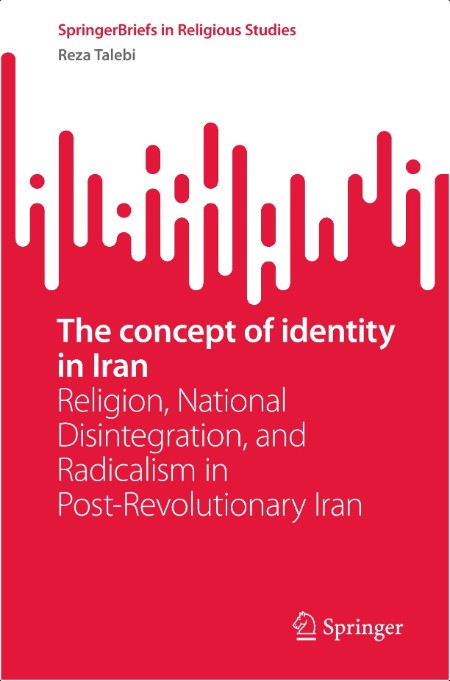
The concept of identity in Iran Religion, National Disintegration, and Radicalism in Post – Revolutionary Iran | 3.5 MB
Title: The concept of identity in Iran
Author: Reza Talebi
Category: Nonfiction, Religion & Spirituality, Middle East Religions, Islam, Social & Cultural Studies, Social Science
Language: English | 162 Pages | ISBN: 3032199875
Description:
This book examines the complex entanglement of religion, nationalism, and identity in modern Iran, tracing the historical and sociopolitical forces that have shaped the country’s tumultuous modernity. Beginning with the introduction of nationalist thought in the nineteenth century, it explores how the fusion of nationalism with a fragmented social fabric gave rise to a potent form of Shiite political Islam, one that would come to define Iran’s political structure and its ideological boundaries. Through an incisive analysis of Iran’s political evolution, this book argues that the rigidity of a state grounded in Shiite political jurisprudence has simultaneously marginalized ethnic and religious minorities and eroded the unifying power of religion itself. As the country becomes increasingly secularized, identity politics have intensified, giving rise to centrifugal ethnic movements and deepening social fragmentation.
Drawing on political theory, sociology of religion, and contemporary Iranian studies, Fragmented Faith, Fractured Nation offers a compelling account of how the interplay of nationalism and political Shiism continues to shape Iran’s domestic tensions and regional dynamics. It presents a bold hypothesis: that the sustained integration of political Shiism and nationalism has not only weakened Iran’s collective religious identity but has also fueled ethnic radicalism, reshaping both the nation’s internal cohesion and its place in the wider Middle East.
This book examines the complex entanglement of religion, nationalism, and identity in modern Iran, tracing the historical and sociopolitical forces that have shaped the country’s tumultuous modernity. Beginning with the introduction of nationalist thought in the nineteenth century, it explores how the fusion of nationalism with a fragmented social fabric gave rise to a potent form of Shiite political Islam, one that would come to define Iran’s political structure and its ideological boundaries. Through an incisive analysis of Iran’s political evolution, this book argues that the rigidity of a state grounded in Shiite political jurisprudence has simultaneously marginalized ethnic and religious minorities and eroded the unifying power of religion itself. As the country becomes increasingly secularized, identity politics have intensified, giving rise to centrifugal ethnic movements and deepening social fragmentation.
Drawing on political theory, sociology of religion, and contemporary Iranian studies, Fragmented Faith, Fractured Nation offers a compelling account of how the interplay of nationalism and political Shiism continues to shape Iran’s domestic tensions and regional dynamics. It presents a bold hypothesis: that the sustained integration of political Shiism and nationalism has not only weakened Iran’s collective religious identity but has also fueled ethnic radicalism, reshaping both the nation’s internal cohesion and its place in the wider Middle East.
DOWNLOAD:
rapidgator.net/file/b1c3dec1668dd91344f3f62583069d17/The_concept_of_identity_in_Iran_Religion_National_Disintegration_and_Radicalism_in_Post-Revolutionary_Iran.rar
nitroflare.com/view/892A2F423EDBE84/The_concept_of_identity_in_Iran_Religion_National_Disintegration_and_Radicalism_in_Post-Revolutionary_Iran.rar
