

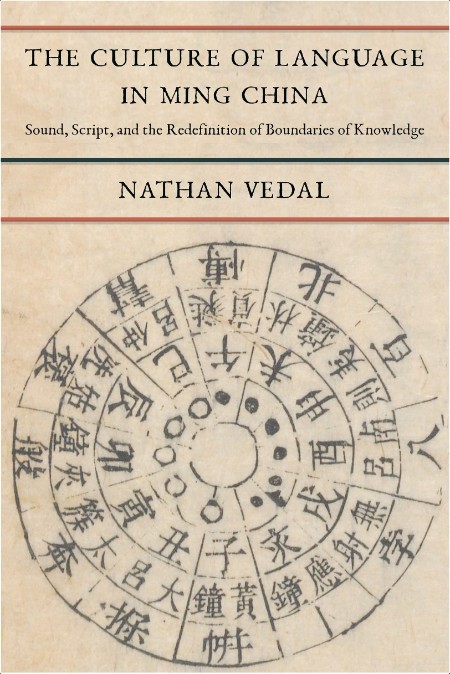
The Culture of Language in Ming China Sound, Script, and the Redefinition of Boundaries of Knowledge | 51.96 MB
Title: The Culture of Language in Ming China Sound, Script, and the Redefinition of Boundaries of Knowledge
Author: Nathan Vedal
Category: Fiction & Literature, Literary Theory & Criticism, Asian, Far Eastern, Nonfiction, Reference & Language, Language Arts, Linguistics, History, China
Language: English | 366 Pages | ISBN: 0231200757
Description:
Winner, 2023 Morris D. Forkosch Prize, Journal of the History of Ideas
The scholarly culture of Ming dynasty China (1368-1644) is often seen as prioritizing philosophy over concrete textual study. Nathan Vedal uncovers the preoccupation among Ming thinkers with specialized linguistic learning, a field typically associated with the intellectual revolution of the eighteenth century. He explores the collaboration of Confucian classicists and Buddhist monks, opera librettists and cosmological theorists, who joined forces in the pursuit of a universal theory of language.
Drawing on a wide range of overlooked scholarly texts, literary commentaries, and pedagogical materials, Vedal examines how Ming scholars positioned the study of language within an interconnected nexus of learning. He argues that for sixteenth- and seventeenth-century thinkers, the boundaries among the worlds of classicism, literature, music, cosmology, and religion were far more fluid and…
Winner, 2023 Morris D. Forkosch Prize, Journal of the History of Ideas
The scholarly culture of Ming dynasty China (1368-1644) is often seen as prioritizing philosophy over concrete textual study. Nathan Vedal uncovers the preoccupation among Ming thinkers with specialized linguistic learning, a field typically associated with the intellectual revolution of the eighteenth century. He explores the collaboration of Confucian classicists and Buddhist monks, opera librettists and cosmological theorists, who joined forces in the pursuit of a universal theory of language.
Drawing on a wide range of overlooked scholarly texts, literary commentaries, and pedagogical materials, Vedal examines how Ming scholars positioned the study of language within an interconnected nexus of learning. He argues that for sixteenth- and seventeenth-century thinkers, the boundaries among the worlds of classicism, literature, music, cosmology, and religion were far more fluid and…
DOWNLOAD:
rapidgator.net/file/d0b934b1b16741133efe15e5a407361b/The_Culture_of_Language_in_Ming_China_Sound_Script_and_the_Redefinition_of_Boundaries_of_Knowledge.rar
nitroflare.com/view/7D31B9DD402F63E/The_Culture_of_Language_in_Ming_China_Sound_Script_and_the_Redefinition_of_Boundaries_of_Knowledge.rar
